International Research Spotlight: Mangrove Intelligence. When IoT Meets Coastal Conservation — An Interview with Prasetyo Wibowo from PENS and Musashino University
As part of our ongoing series highlighting international research collaborations at the Asia AI Institute (AAII) and Musashino University's Faculty of Data Science (MUDS) program, Associate Professor Yusuke Takahashi sat down with Prasetyo Wibowo, a researcher from Politeknik Elektronika Negeri Surabaya (PENS) in Indonesia who is currently pursuing his doctoral studies at Musashino University. Wibowo's research, titled "Mangrove Intelligence," combines IoT sensing, AI-powered image analysis, and semantic computing to monitor and protect mangrove ecosystems — vital natural barriers for coastal communities across Southeast Asia. His work, presented at the AAII Symposium 2025 in Phuket, Thailand, exemplifies the kind of cross-border, interdisciplinary innovation that bridges local environmental challenges with global intelligence.
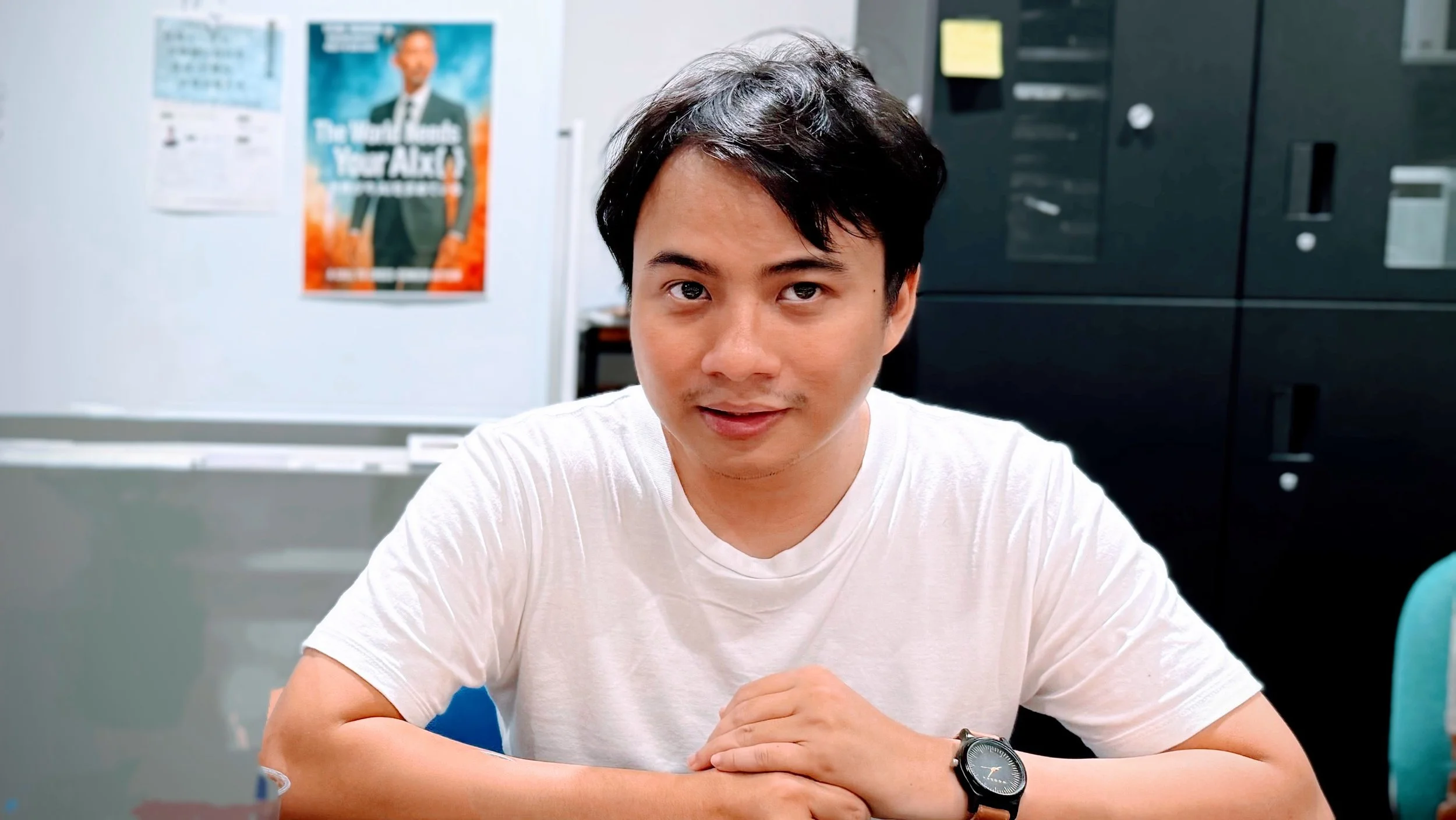
Figure 1. Prasetyo Wibowo, a researcher from Politeknik Elektronika Negeri Surabaya (PENS) in Indonesia.
Takahashi: Welcome, Prasetyo! You occupy a unique position — you're a faculty member at PENS, one of Indonesia's top polytechnics, and at the same time a doctoral student here at Musashino University. Could you start by telling us how you came to bridge these two worlds?
Wibowo: Thank you, Dr. Takahashi. My background at PENS is in electronic engineering and information technology, with a strong focus on IoT and embedded systems. I've always been passionate about applying technology to real-world problems, and when I learned about the research environment at Musashino University and the Asia AI Institute, I saw an incredible opportunity. The concept of semantic computing developed by Professor Kiyoki — especially the idea of giving meaning to data — resonated deeply with what I wanted to achieve in environmental monitoring. So I decided to pursue my doctoral research here, while maintaining my teaching and research responsibilities at PENS.
Takahashi: Your research project, "Mangrove Intelligence," has a very evocative name. What exactly is it, and what problem are you trying to solve?
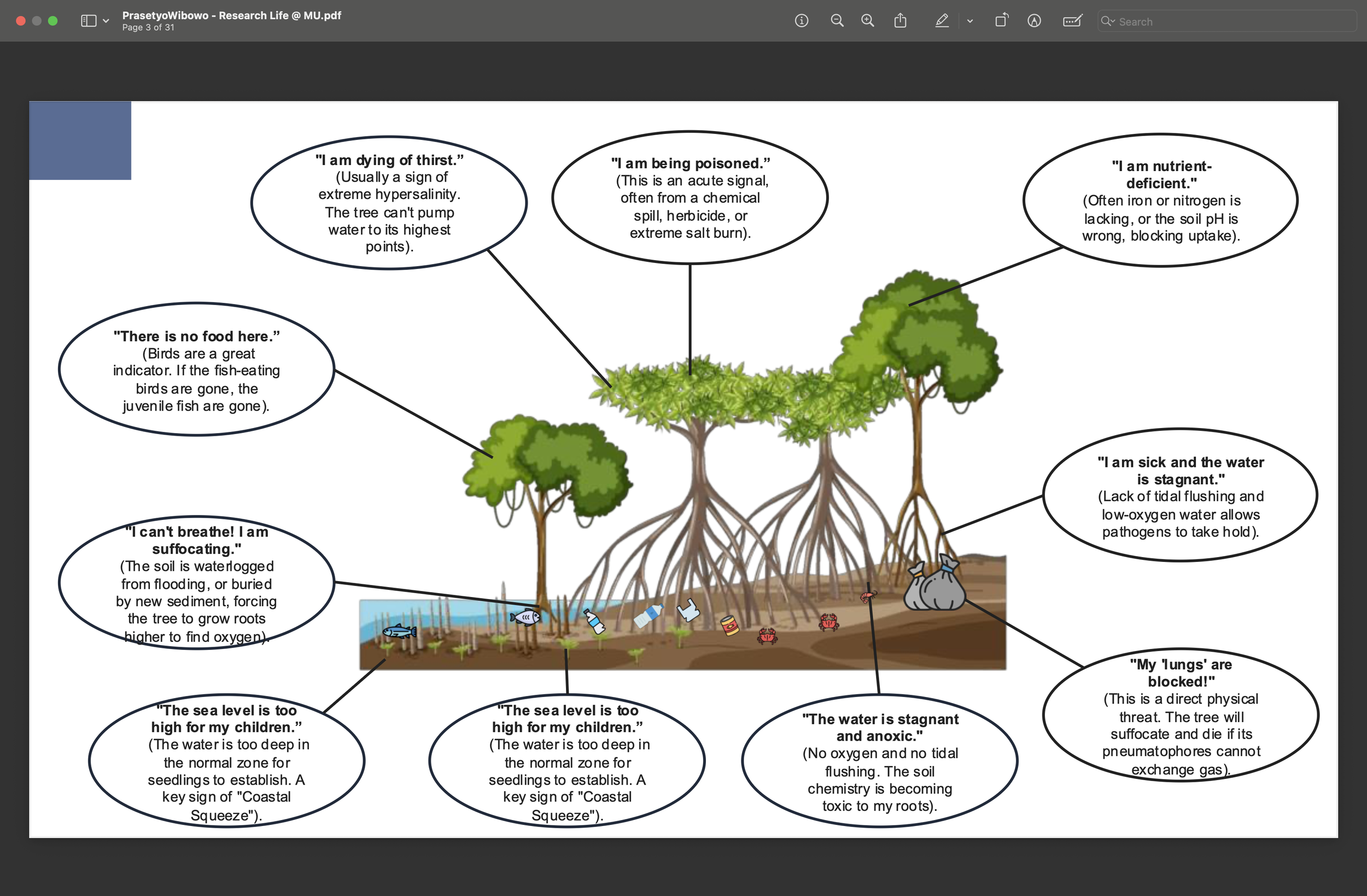
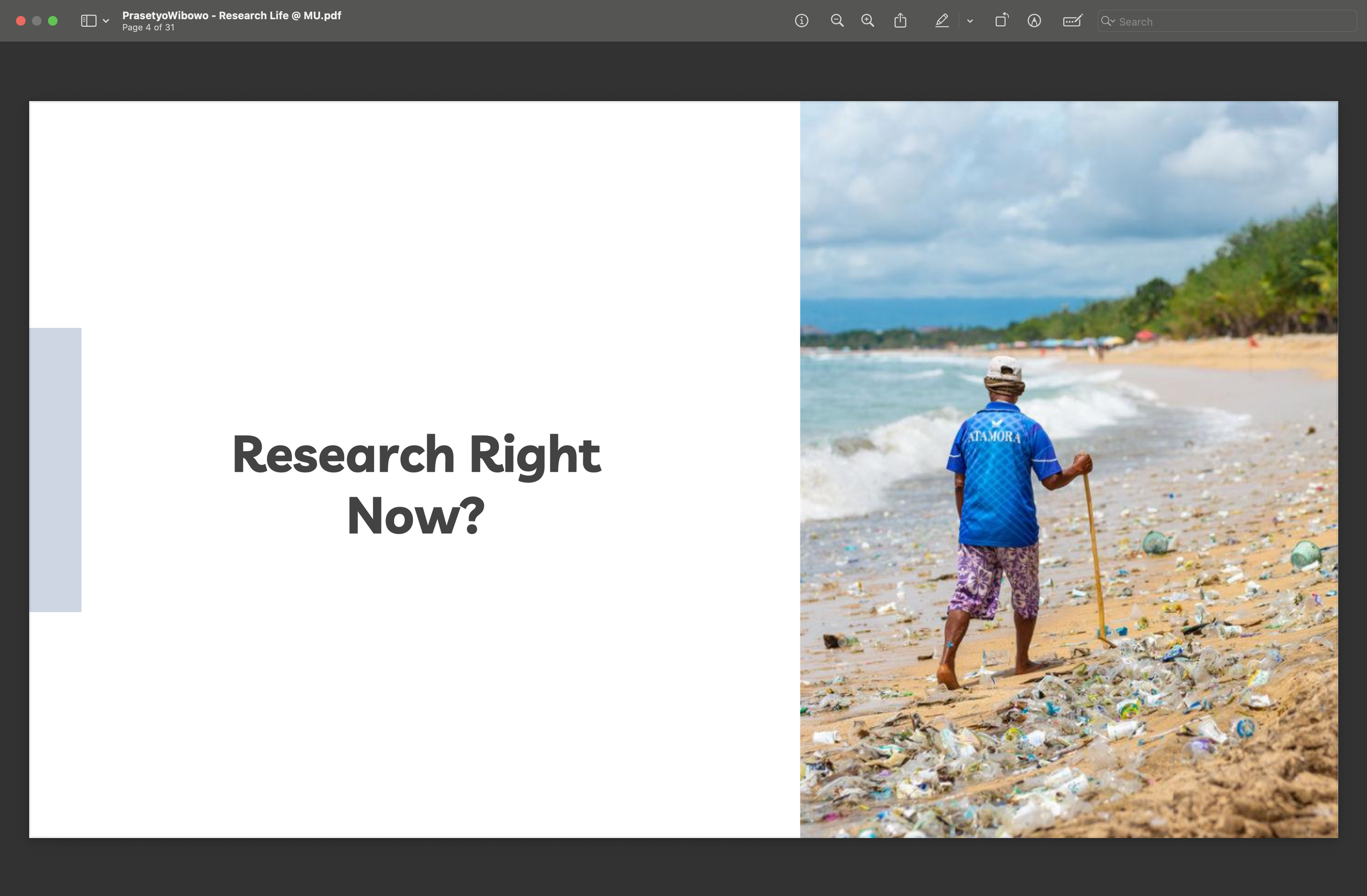
Wibowo: Mangrove ecosystems are among the most important natural assets in Southeast Asia. They protect coastlines from erosion, serve as nurseries for marine life, and store enormous amounts of carbon. But they're under severe threat from pollution, coastal development, and climate change. The problem is that monitoring these ecosystems has traditionally been either too expensive, too slow, or too disconnected from the people who need the information most — the local communities and conservation workers on the ground.
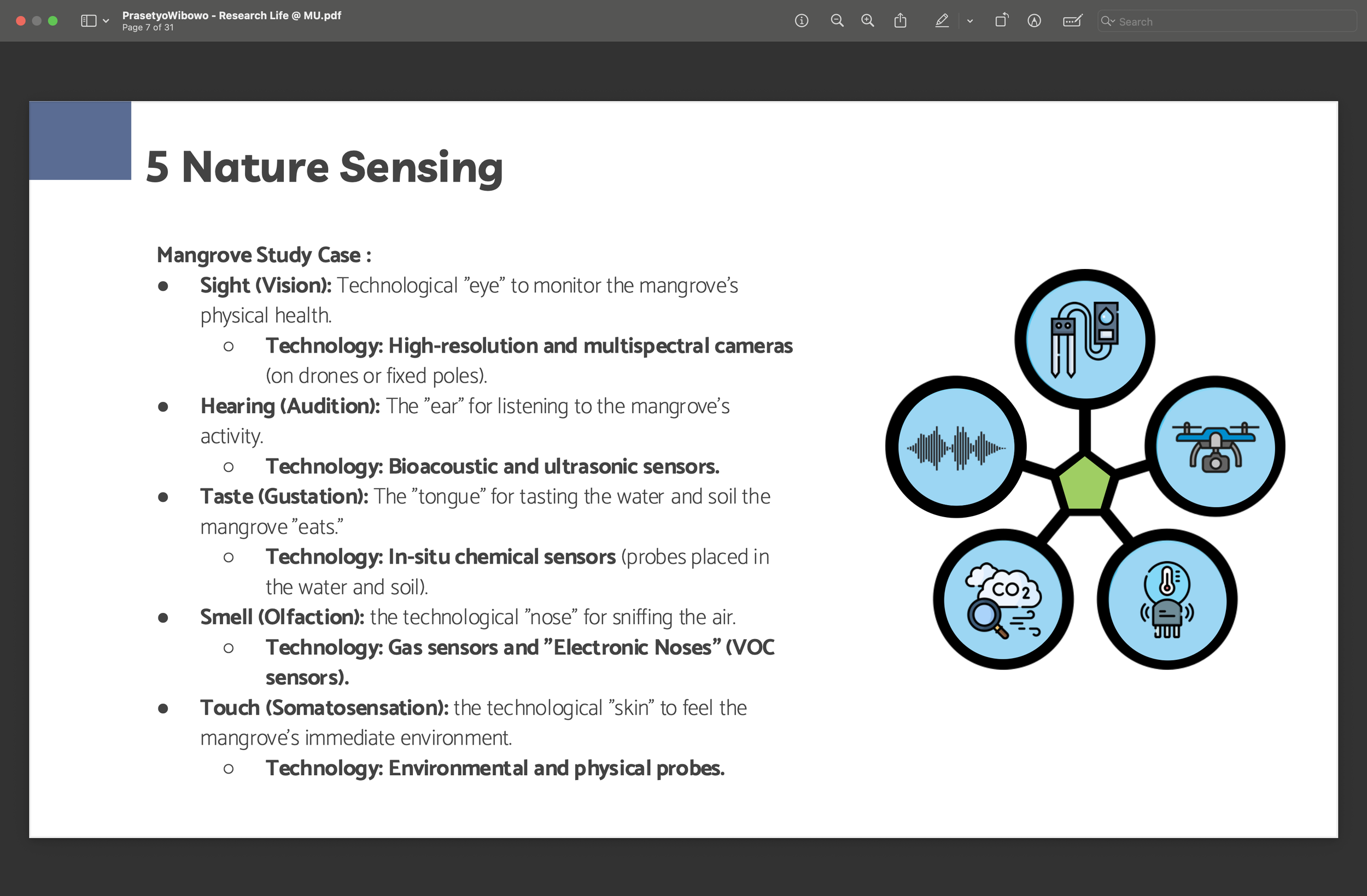
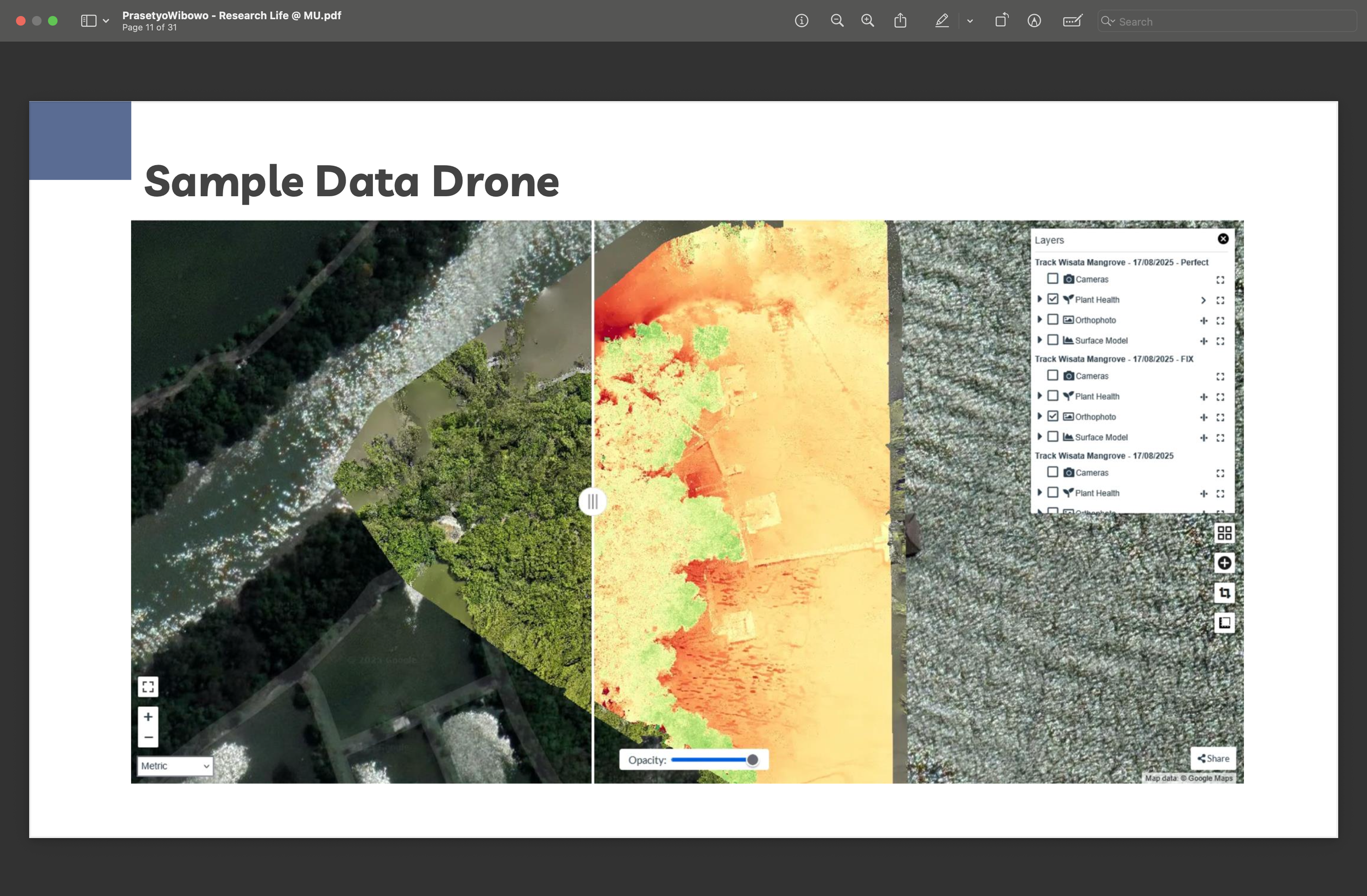
Mangrove Intelligence is a cyber-physical framework that treats the mangrove forest as a living entity and uses technology to "listen" to its needs. We designed the system around a concept I call "5 Nature Sensing" — modeled after the five human senses. For "sight," we use drones with multispectral cameras to assess vegetation health. For "hearing," we deploy bioacoustic sensors to track biodiversity. For "taste" and "smell," we use in-situ chemical sensors and electronic noses to analyze water quality, soil nutrients, and air pollution. And for "touch," environmental probes measure temperature, moisture, and physical conditions in real time.
Takahashi: That's a beautifully intuitive way to frame a complex sensing system. How does the data actually get transformed into action?
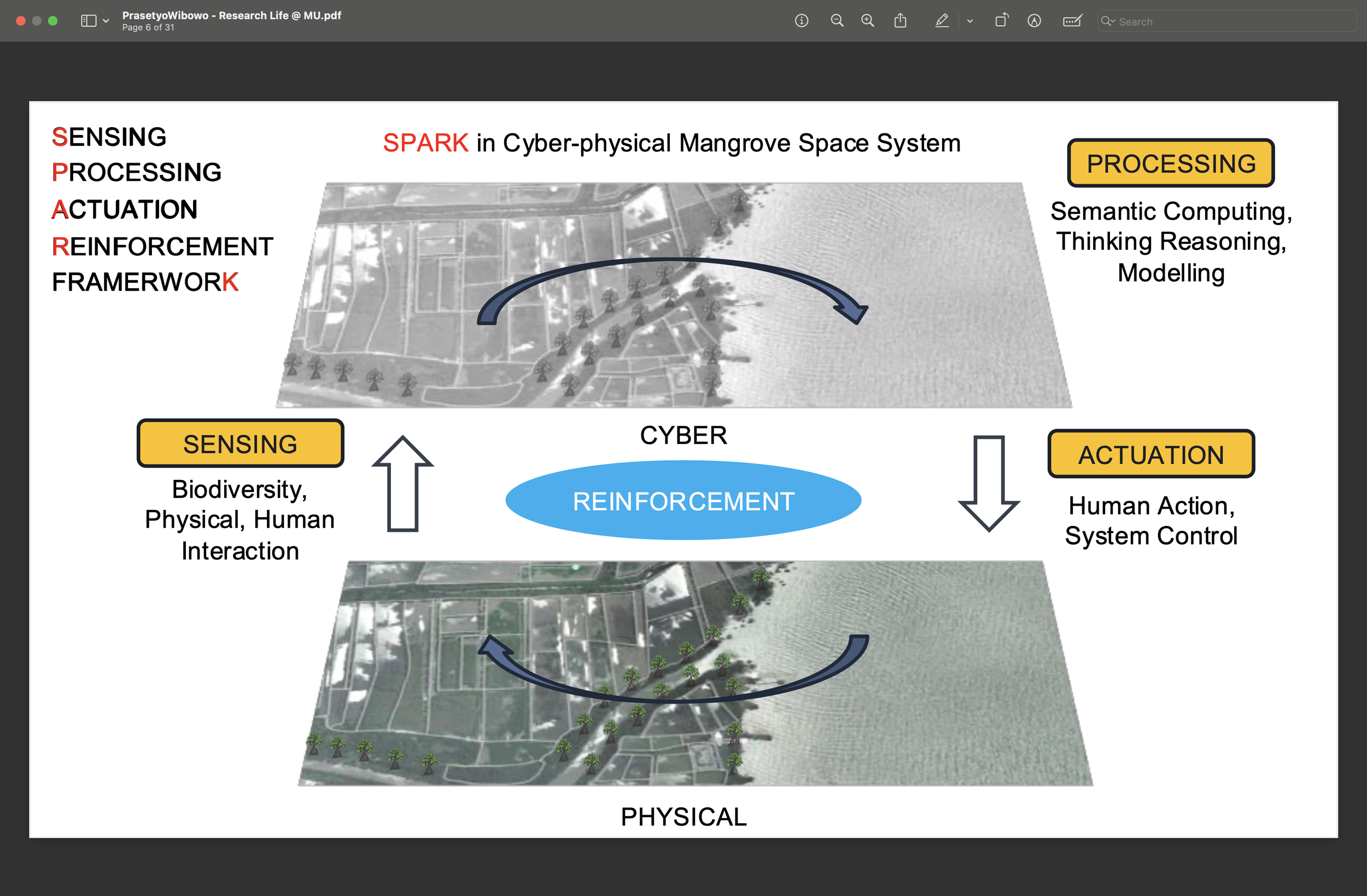
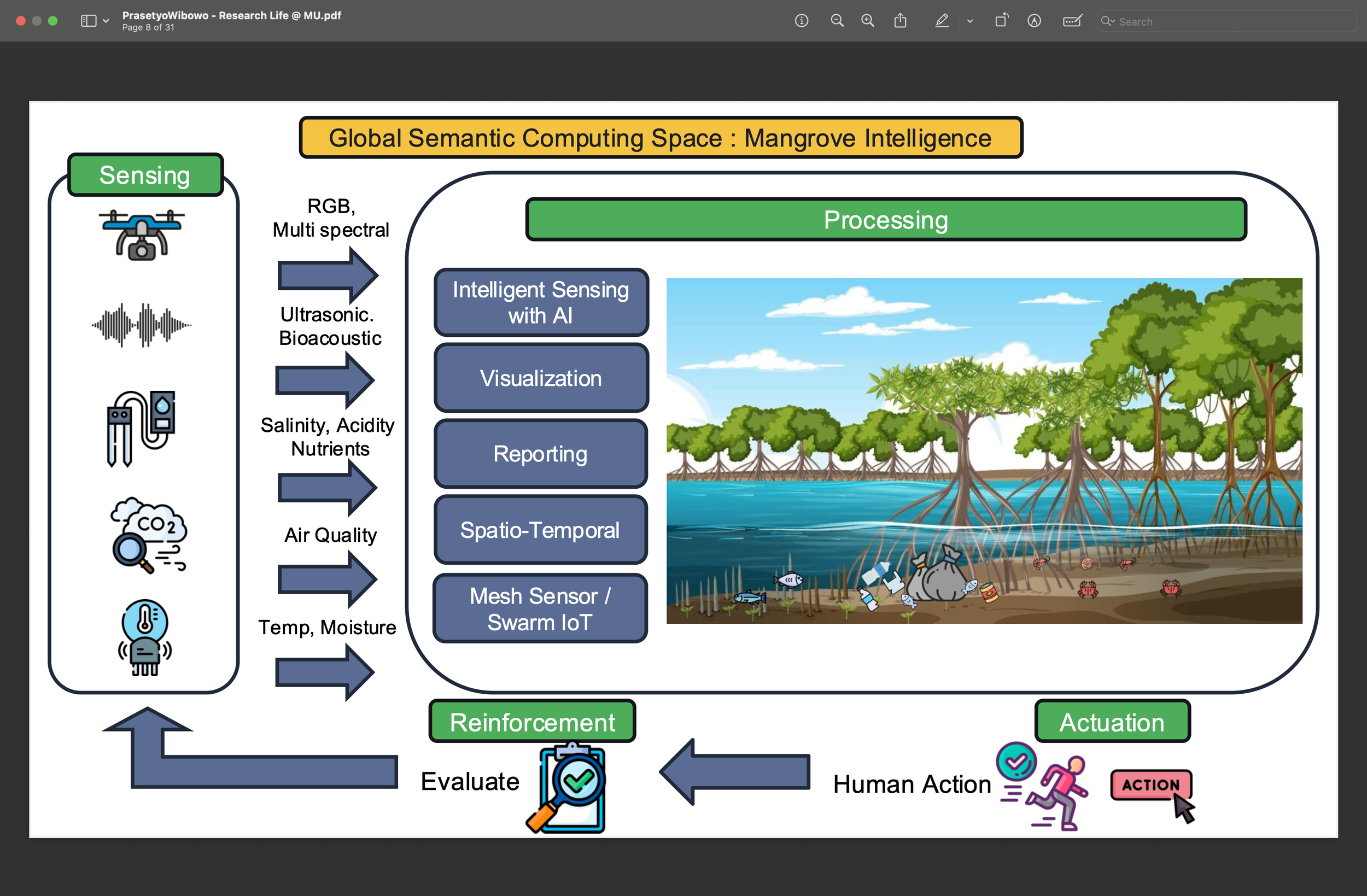
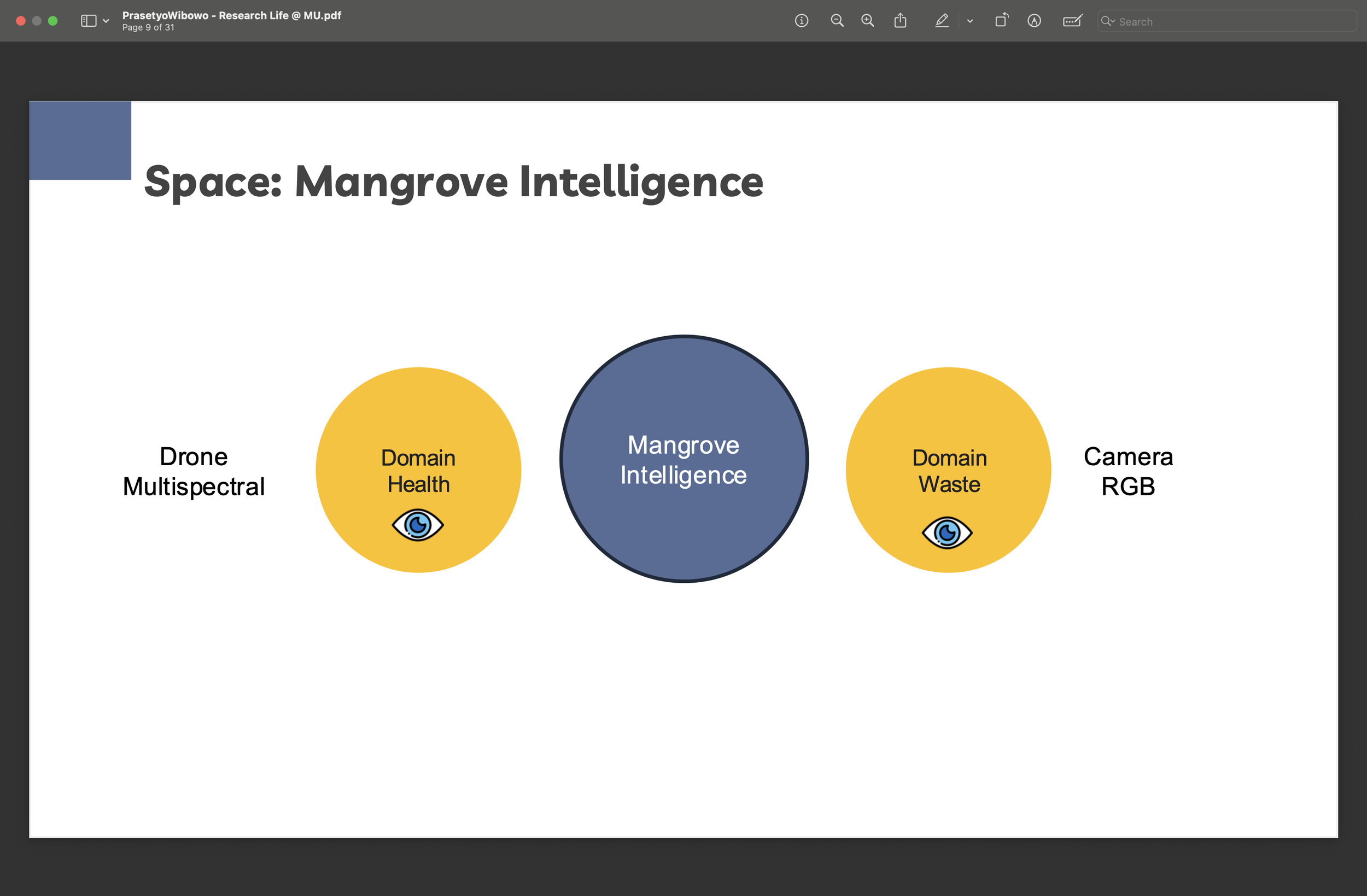
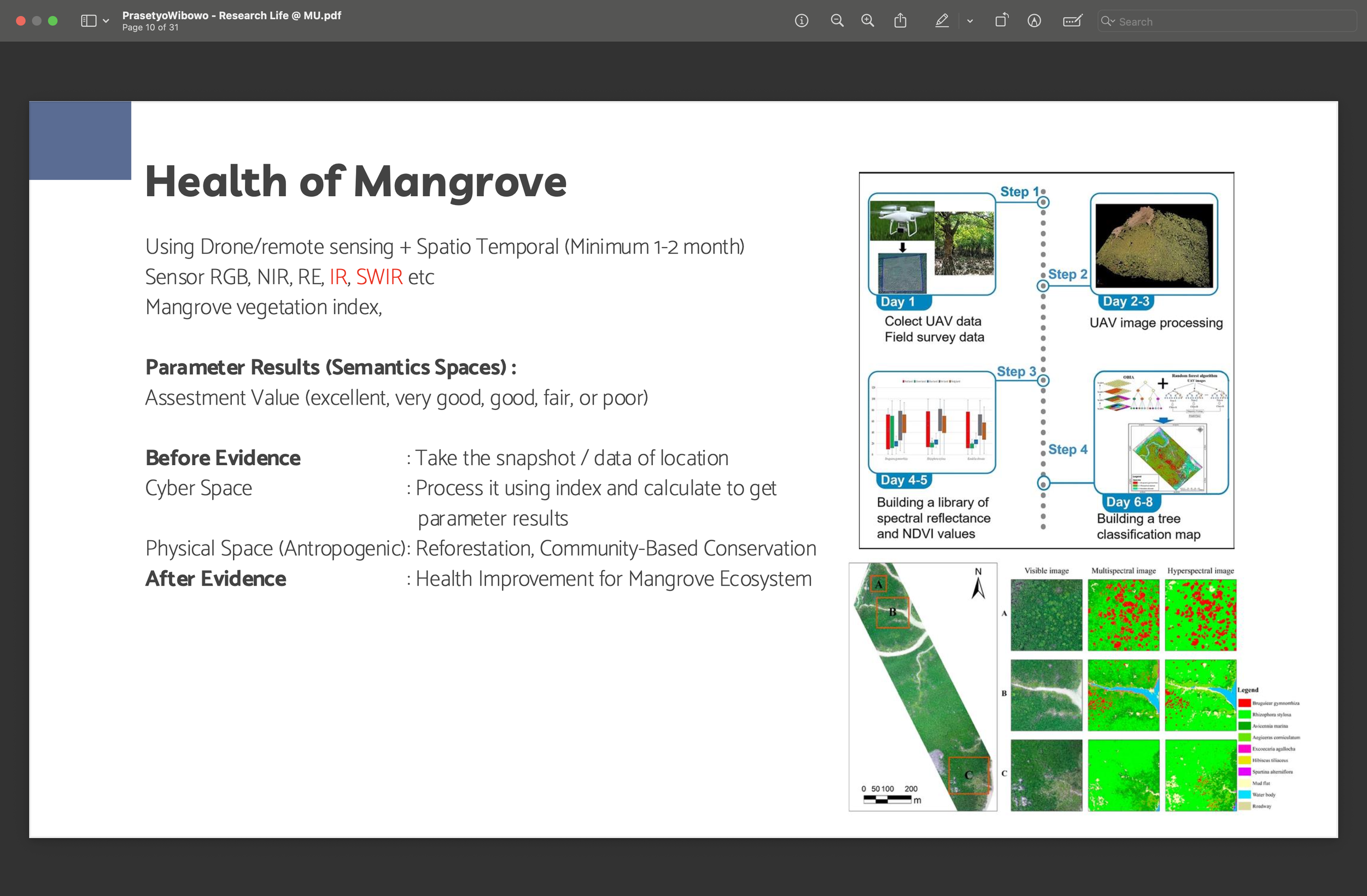
Wibowo: This is where the "SPARK" framework comes in — Sensing, Processing, Actuation, Reinforcement, and Framework. Once the sensor data is collected in the physical space, it enters what we call the "Global Semantic Computing Space," where AI models process it. For health monitoring, we calculate vegetation indices like NDVI using drone imagery and classify areas as excellent, good, fair, or poor. For waste monitoring, we use object detection models to identify and count different types of garbage — plastic wrappers, food cans, styrofoam — and map their locations with GPS coordinates.
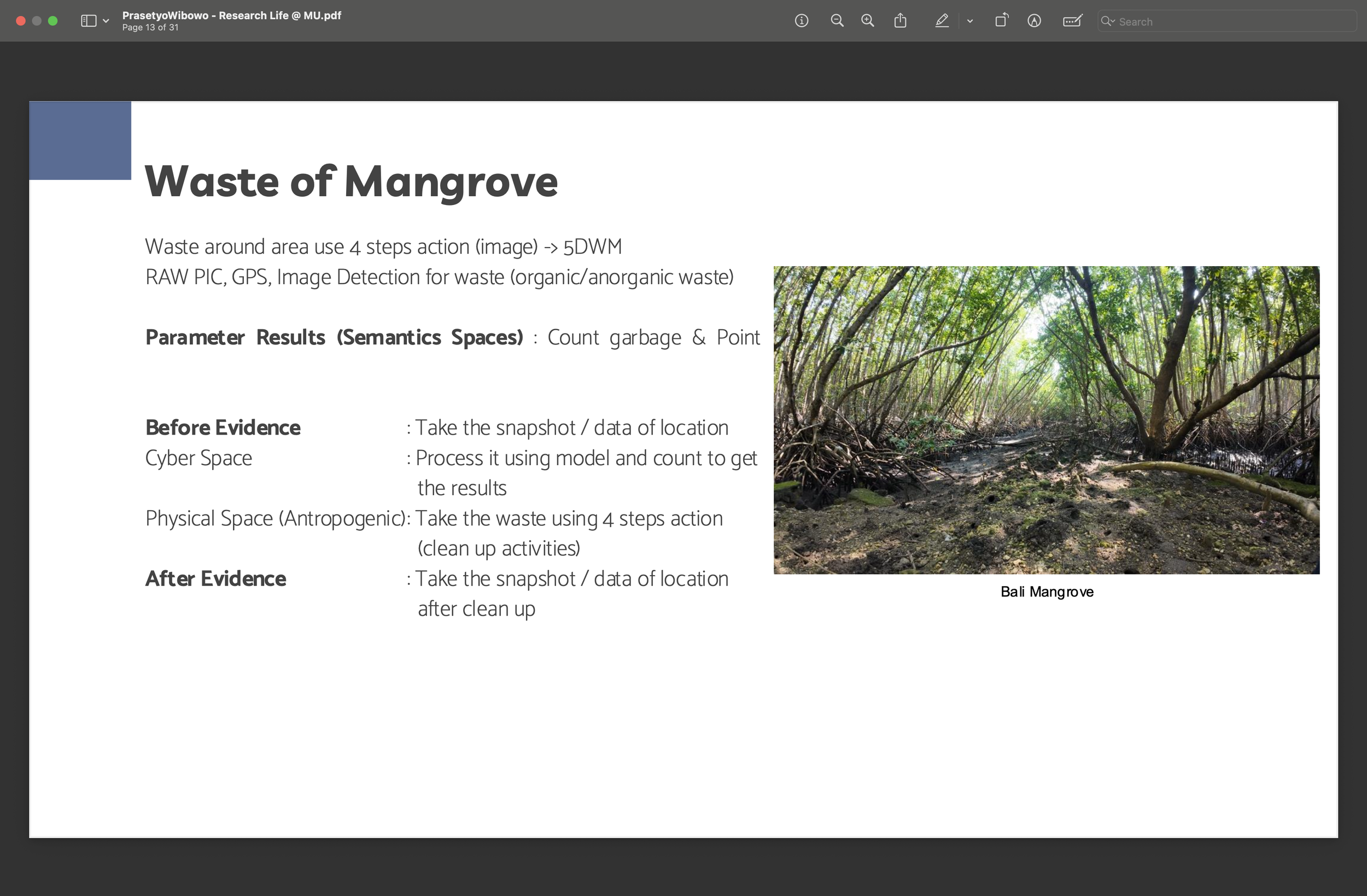
But data alone isn't enough. The key innovation is connecting this intelligence to human action. We developed a "4-Step Human Action" protocol: Find the waste, Pick it up, Document it by taking a photo, and Clean the area. We then compare before-and-after data to measure the actual impact of conservation activities. This closes the loop between the cyber and physical spaces.
Takahashi: You mentioned field studies in Surabaya and Bali. Could you share some concrete results?
Wibowo: We've conducted extensive field work at the Wonorejo mangrove area in Surabaya and at Benoa Bay in Bali. In Wonorejo, we deployed drones to capture multispectral imagery in August 2025 and used our waste detection system to create spatial risk maps. Each data point includes GPS coordinates, waste count, and a risk score from 0 to 5. We visualized these as hexagonal spatial vectors on a map, which immediately shows conservationists where the critical spots are — where to prioritize cleanup efforts.
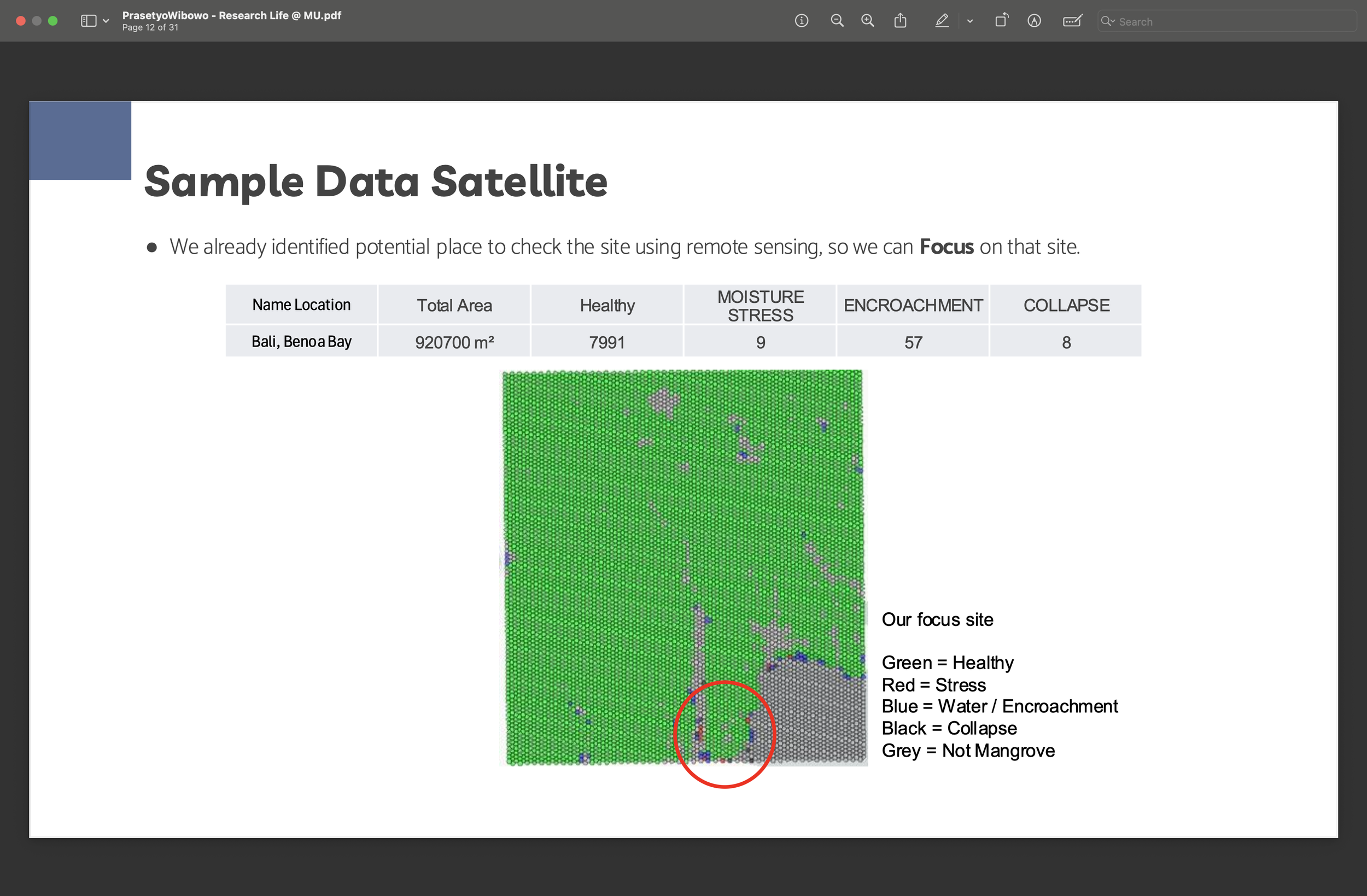
At Benoa Bay, our satellite analysis covered over 920,000 square meters. We classified 7,991 areas as healthy, identified 9 areas with moisture stress, 57 with encroachment, and 8 in collapse. This kind of granular, evidence-based assessment was previously impossible at this scale with limited resources.
Takahashi: This connects beautifully with the Semantic Microscope project that Professor Kiyoki and Dr. Uraki presented at the same symposium. How do you see your work relating to that broader framework?
Wibowo: Absolutely — the connection is fundamental. The Semantic Microscope provides the theoretical foundation for how we "focus" on the data that matters. In Professor Kiyoki's framework, the expert's viewpoint is quantified through five elements that can be stored, shared, and switched — just like adjusting a microscope. In Mangrove Intelligence, when we decide to focus on vegetation health versus waste distribution, we're essentially switching the "lens" of our semantic microscope. The combination of sensing modalities and the analytical context we apply represents exactly those data focusing options that the Semantic Microscope formalizes. Our mangrove work is, in many ways, a real-world application of that philosophy — turning local insights from Indonesian coastal ecosystems into globally shareable intelligence.
Takahashi: What strikes me about your work is that it's fundamentally about creating social impact — not just publishing papers, but actually changing how communities protect their environment. I see a deep connection here with the DNA of both our institutions. I often call PENS "the Stanford of Indonesia" — it's ranked number one in innovation nationally, and like Stanford, it sits at the intersection of engineering excellence and entrepreneurial energy. I come from Keio University's Shonan Fujisawa Campus (SFC), which was founded with a similar philosophy of bridging disciplines for social impact, and I spent years in Silicon Valley building startups. And here at MUDS and MIDS, Dean Kiyoki has always emphasized that data science is a science destined to create impact on society — it's not just about algorithms, it's about imagining real-world phenomena and giving meaning to data so that it transforms communities and industries. In that sense, PENS, SFC, Silicon Valley, and MUDS/MIDS all share the same fundamental commitment: everything is for social innovation. What is it that drives you personally? What's the deeper motivation behind Mangrove Intelligence?
Wibowo: That's a really important question, and I think you've articulated something I've felt but never quite put into words. When I first started working with mangroves, it wasn't because I was interested in environmental science per se — it was because I saw communities in Surabaya living right next to these ecosystems, suffering from coastal erosion and pollution, and I thought: "I'm an engineer. I have the tools to help. So why wouldn't I?" That's the entrepreneurial mindset you're describing — not entrepreneurship in the sense of starting a company, but in the sense of seeing a problem, taking ownership, and building a solution.
What excites me about the PENS-Musashino connection is exactly this shared philosophy. At PENS, we're trained to build things that work — real systems, real hardware, real deployments. But through my doctoral work here, I've learned to think more deeply about why those systems matter, how to give semantic meaning to the data they produce, and how to design research that creates lasting social value. The "{Your Expertise} × AI = Innovation" equation that MIDS promotes is not just a slogan — it describes exactly what I'm doing. My expertise in IoT and embedded systems, multiplied by the AI and semantic computing capabilities I've developed at Musashino, equals a new kind of intelligence for coastal conservation that didn't exist before.
And I think this is what makes the collaboration between PENS and Musashino so special. Both institutions believe that technology without social purpose is incomplete. Whether it's Professor Kiyoki's vision of data science as "a science that gives names to numbers," or PENS's culture of building innovation that solves real problems, the underlying drive is the same: we do research to make the world better.
Takahashi: I couldn't agree more. And I think that shared DNA is precisely why our students and researchers create such powerful synergies when they work together across borders. Now, beyond your research, you've also been deeply involved in life at Musashino University. Tell us about that experience.
Wibowo: My time at Musashino University has been transformative in ways I didn't expect. I serve as a Teaching Assistant for undergraduate data science courses, which has given me a wonderful window into how Japanese students approach learning. The classroom "vibe" is different from Indonesia — students here are incredibly focused and disciplined, and I've learned a lot about different pedagogical approaches that I plan to bring back to PENS.
I've also had incredible opportunities for professional exposure. Our research group visited JR East headquarters, where we explored how data science is being applied in transportation infrastructure. And of course, the social side has been wonderful — celebrating New Year with lab mates, exploring temples and historical sites across Japan. These experiences create bonds that go far beyond the academic collaboration.
Takahashi: From your perspective as someone who lives in both the Indonesian and Japanese academic worlds, what unique value do you see in the PENS-Musashino partnership, especially with the new MIDS program launching in April 2026?
Wibowo: I think this partnership is incredibly powerful because it brings together complementary strengths. PENS excels in engineering, IoT, and hands-on technical innovation — it's ranked number one in Indonesia for innovation. Musashino University, through MUDS and the new MIDS program, brings world-class expertise in semantic computing, data science methodology, and a deeply international research culture through AAII. When you combine PENS students' engineering skills with MIDS's "{Your Expertise} × AI = Innovation" philosophy, you create researchers and practitioners who can solve real-world problems that neither institution could address alone.
The double degree program between PENS and MIDS is a game-changer. Students can earn both a PENS degree and a Musashino University degree, gaining exposure to two very different academic cultures and research traditions. For Indonesian students, this opens doors to Japan's technology ecosystem. For Japanese students, it offers a direct connection to one of Southeast Asia's most dynamic innovation hubs.
Takahashi: As we wrap up, what's next for Mangrove Intelligence, and what advice would you give to students considering this kind of cross-border research?
Wibowo: For Mangrove Intelligence, our next step is to expand the sensing network to more sites across Indonesia and potentially Thailand, building on the collaborations we established at the AAII Symposium in Phuket. We're also working on making the system more accessible to local communities — developing mobile applications that anyone can use to participate in the 4-Step Action protocol. The vision is to create a platform where local knowledge from communities across Asia feeds into a shared intelligence system for coastal conservation.
My advice to students is simple: don't be afraid to get your feet muddy — literally and figuratively. The best research happens when you combine cutting-edge technology with genuine passion for the problem you're solving. And international collaboration isn't just about sharing papers — it's about building relationships, understanding different cultures, and seeing your own work through new eyes. Programs like MIDS make that possible from day one, and I can personally say that this experience between PENS and Musashino University has transformed not just my research, but how I see the world.
Takahashi: Thank you so much, Prasetyo. Your work is a perfect embodiment of our "Local Insights to Global Intelligence" mission — taking deep knowledge of Indonesian coastal ecosystems and transforming it into a framework that can benefit communities worldwide.
Wibowo: Thank you, Dr. Takahashi. I'm grateful to be part of this community, and I look forward to welcoming the first generation of MIDS students to this exciting journey.
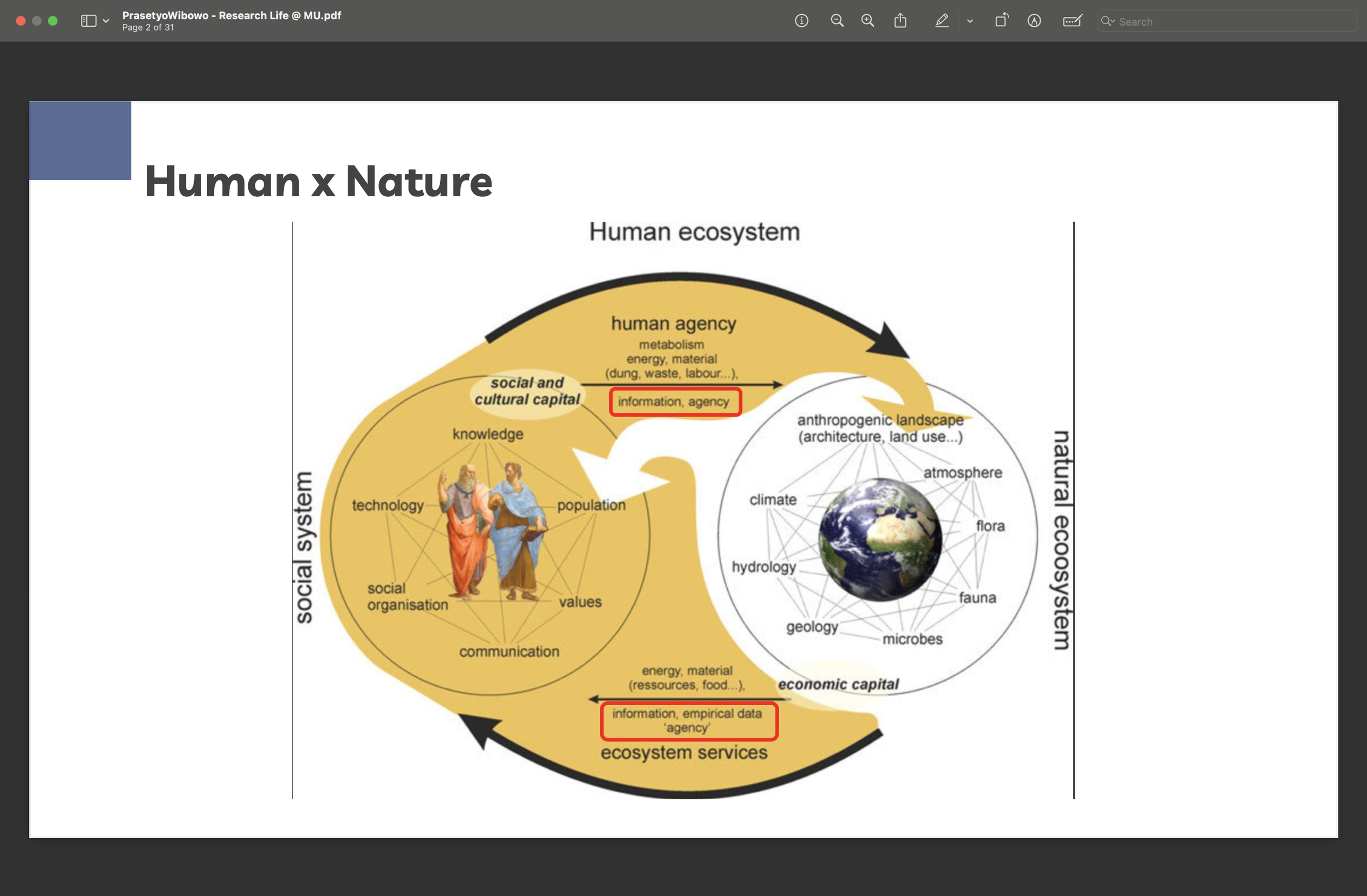
Prasetyo Wibowo's research on Mangrove Intelligence was presented at the AAII Symposium 2025 in Phuket, Thailand (November 13, 2025), and most recently at the MIDS Information Session "Local Insights to Global Intelligence" at PENS, Surabaya (February 6, 2026). His work is part of a broader collaborative research program between PENS, Musashino University's MUDS, the newly established MIDS, and the Asia AI Institute (AAII), which connects researchers across Indonesia, Japan, and Thailand to address global challenges through data science and semantic computing.
For more information about research collaborations and visiting researcher opportunities at MUDS and AAII, please contact us through muds.ac/contact.