
[Action 4 Changes] March 4-8, 2024
PENS-MU_fieldwork@Surabaya
“One Step for Earth: Environmental Cleanup Expedition”
March 4-8, 2024
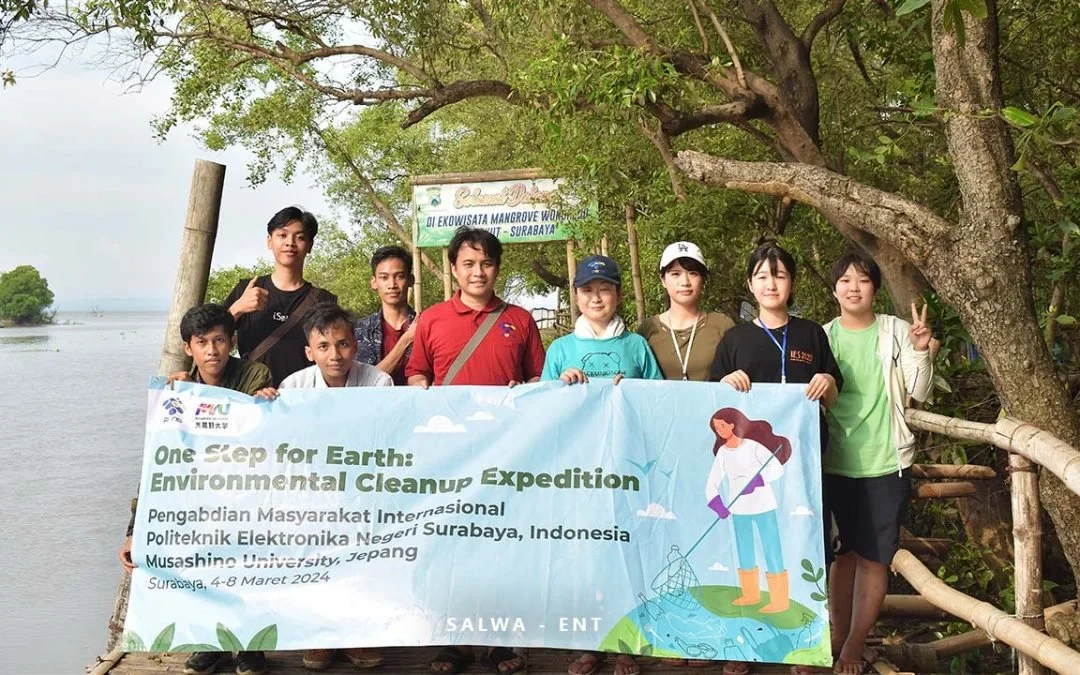
At Mangrove Winorejo, Surabaya, Indonesia
Author: Shiori Sasaki
I led three undergraduate students from the Faculty of Data Science at Musashino University (MUDS) in a joint program with our overseas partner institution, Politeknik Electroniks Negeri Surabaya (PENS), involving the Department of Computer Informatics and the Department of Data Science (one faculty member Mr. Prasetyo Wibowo and eight students from PENS). Together, we conducted urban river and marine environmental sensing experiments, as well as fieldwork focused on collecting plastic waste along urban rivers and coastal areas.
The activities included:
In collaboration with PENS, collecting spatiotemporal image data on plastic waste conditions along major waterways in Surabaya—Jagir River, Kalimas River, Kenjeran Beach, and Surobojo Bridge—using 360-degree cameras, mobile cameras, and action cameras;
Uploading image and measurement data, and mapping, storing, and visualizing them within a geospatial mapping system;
Measuring the volume of collected plastic waste, validating the accuracy of machine learning models, and analyzing differences before and after cleanup activities;
Installing plastic waste collection devices and conducting cleanup activities in the mangrove conservation area of Mangrove Wonorejo;
Presenting the outcomes of the fieldwork to PENS students and faculty under the title: “Cyber-Physical & Human-Activity Project: A SPA-based Plastic Waste Detection & Collection with 5D World Map System: PENS-MU Fieldwork in Surabaya ‘One Step for Earth: Environmental Cleanup Expedition.’”
In addition, meetings were held with the Rector of PENS and faculty members in charge of international collaboration to discuss and consider the extension of the MOU between the two institutions, as well as future opportunities for short-term student exchanges and study abroad programs.
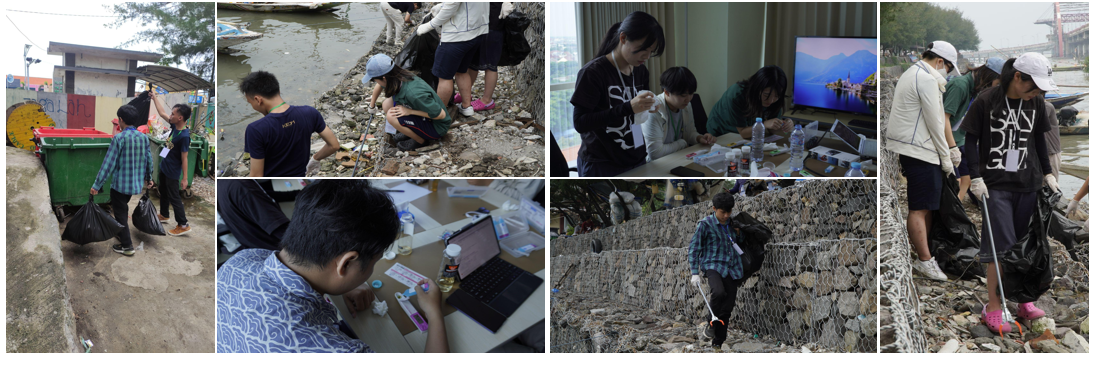
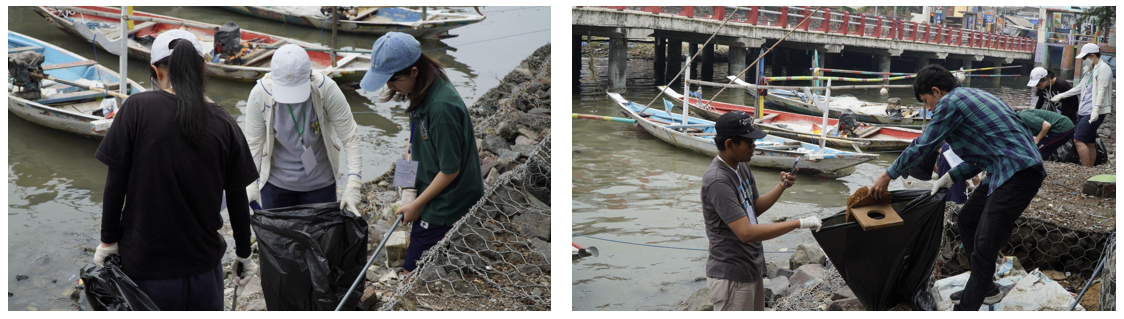
Plastic waste collection & measurement and water-quality sensing at Surobojo Bridge
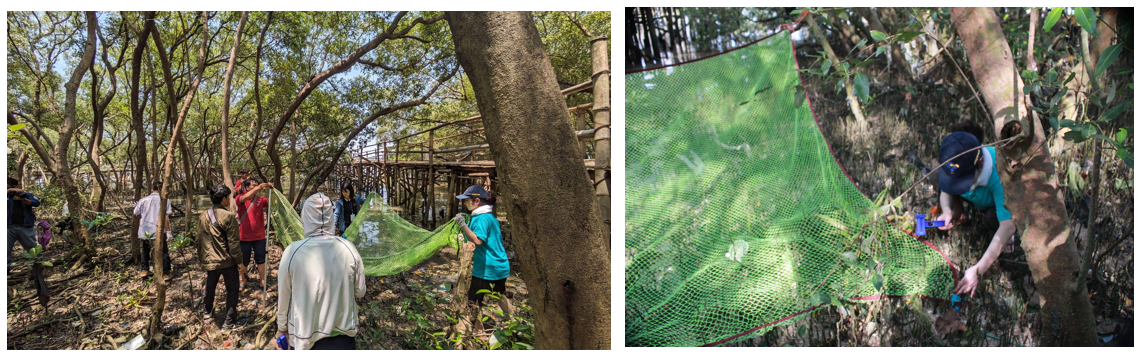
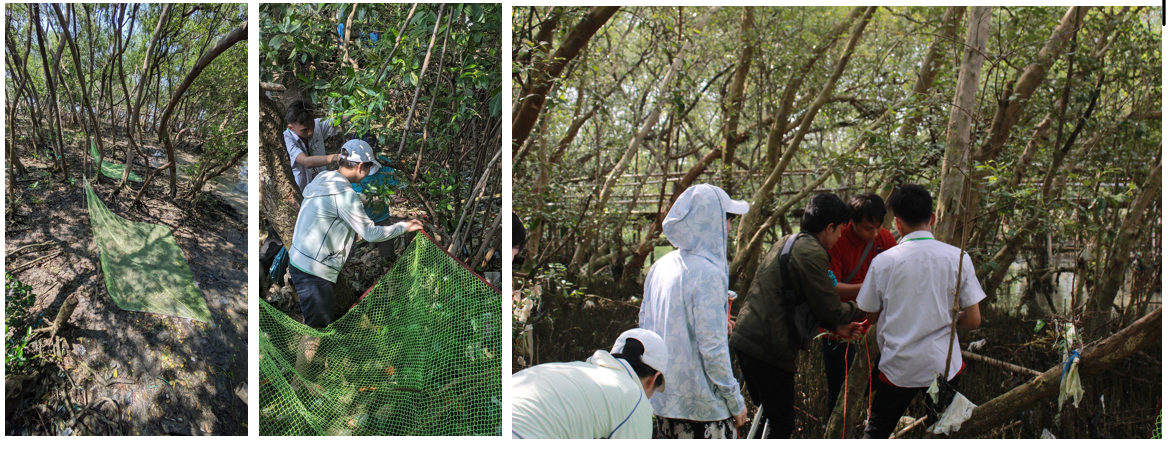
Plastic waste collection & measurement and mangrove protection device setting at Mangrove Wonorejo
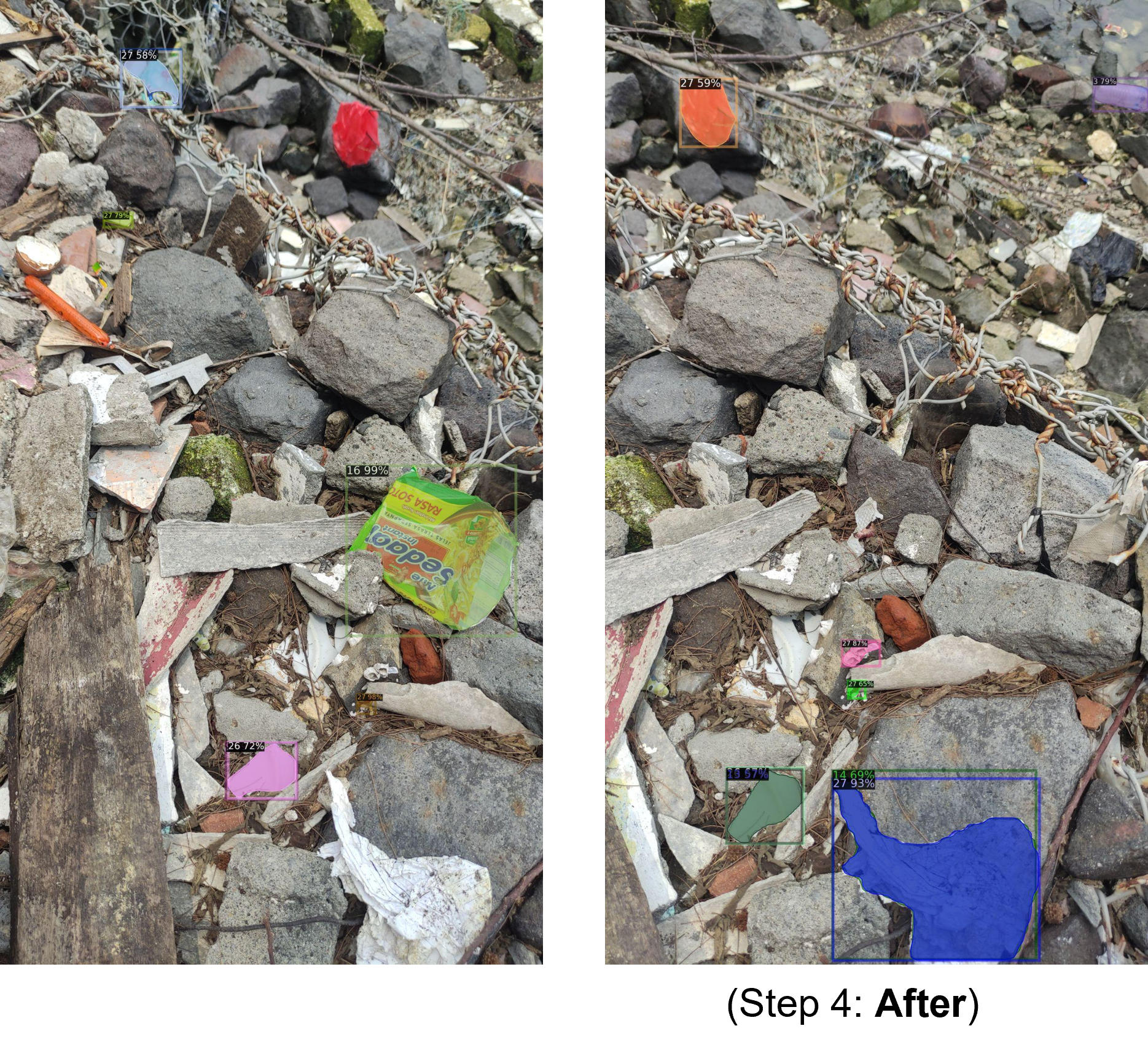
AI-based analysis on the improvement
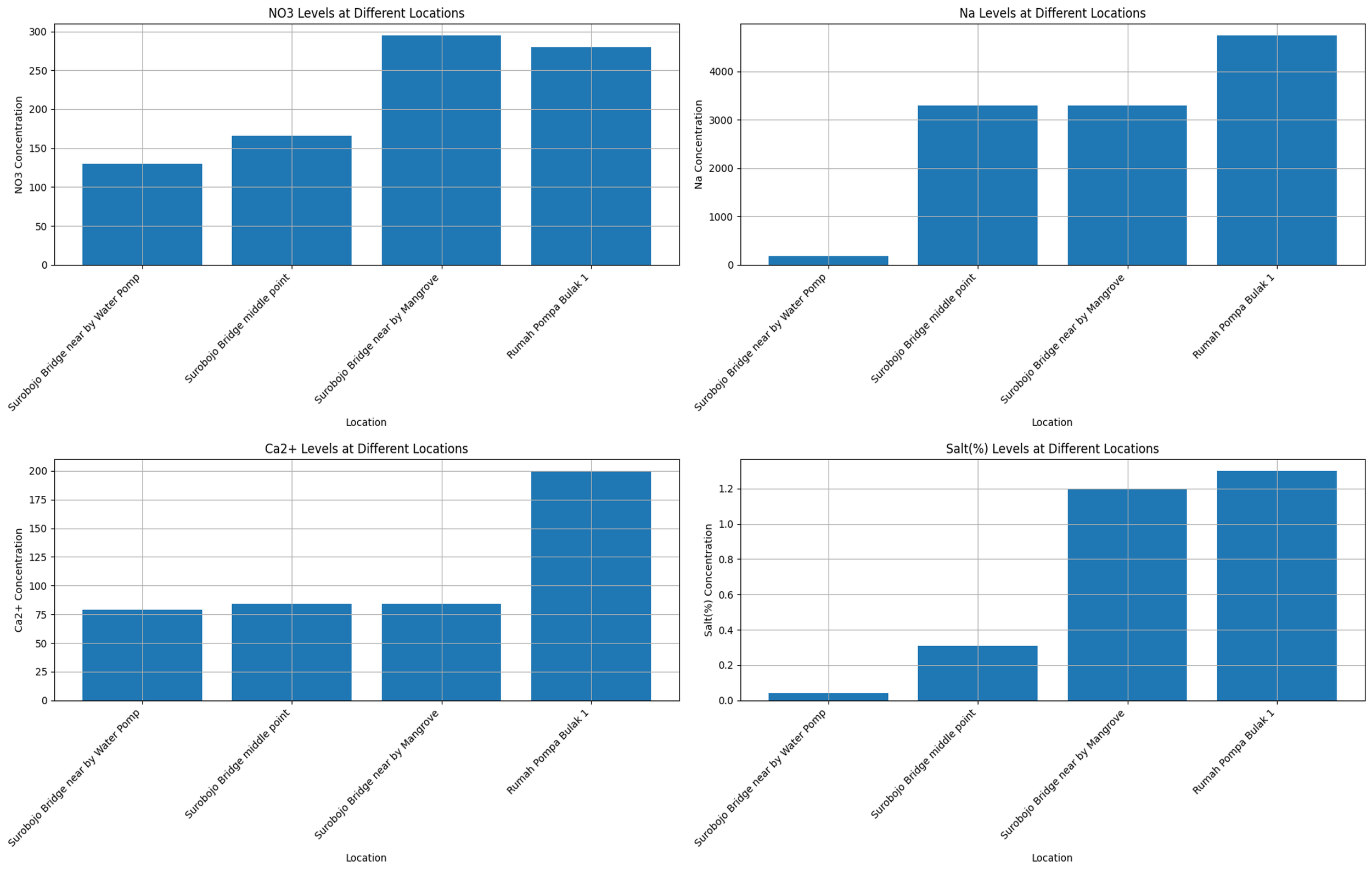
Water-quality analysis
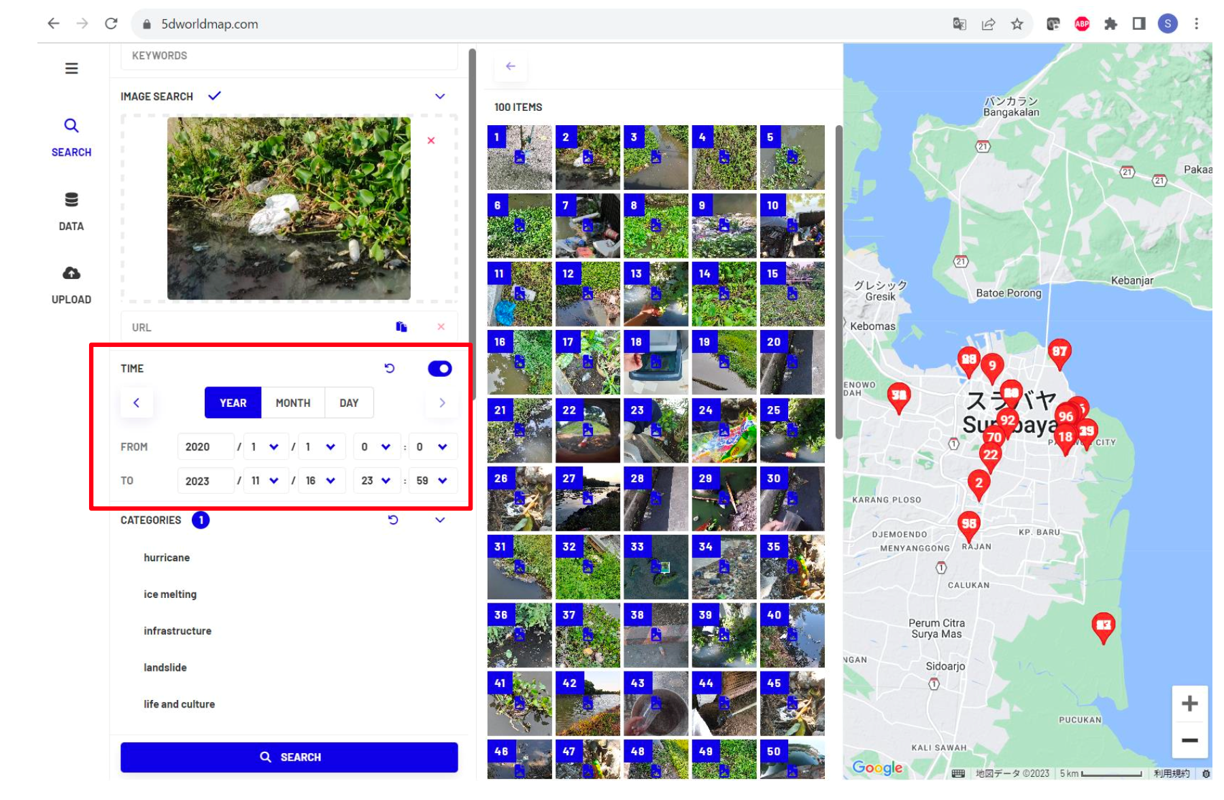
Hotspot analysis and sharing on 5D
PENS reporter’s articles on this event (Indonesian) | March 22, 2023
The following is English transcript:
In international community service, PENS collaborates with Musashino University to find and overcome plastic waste pollution in the sea. Applying Sensing-Processing-Actuation (SPA) technology with the 5D World Map System , the fieldwork experiment took location points in the Wonorejo Mangrove Ecotourism Monday to Friday (4-8/3). Design, experimentation and implementation continue to be pursued to achieve zero waste , with the hope of increasing public awareness of the importance of preserving marine ecosystems.
Referring to the United Nations Ocean Conference program initiated by the Economic and Social Commission for Asia and the Pacific (ESCAP), an environmental cleanup expedition has been planned since 2020. Implementation of this plan involves collaboration between Assoc. Prof. Sasaki Shiori, as Project Associate Professor from the Faculty of Data Science, Musashino University and Aliridho Barakbah, S. Kom., Ph.D., as Director of the Surabaya State Electronics Polytechnic (PENS). Various preparations were made to integrate cyber-physical and human-activity in this project. In the briefing and discussion session which took place on Monday (4/3), several potential locations were discussed as the focus of the project and it was decided to make Wonorejo Mangrove Ecotourism an experimental location. "We have carried out a survey first, there are indeed several potential places that are suitable for this project. "However, considering the dry condition of the river in Surabaya and also safety, we agreed to choose Wonorejo Mangrove Ecotourism," said Prasetyo Wibowo, SST, M.Kom, as International Community Service Coordinator.
Deputy Chair of Wonorejo Mangrove Ecotourism, David Nugroho, expressed his enthusiasm, "We really appreciate the PENS and Musashino University initiative program. Bearing in mind that the last inspection of the amount of waste discharge in the Wonorejo Mangrove was carried out in 2018-2019, the implementation of this program made a big contribution in enabling us to monitor the decrease or increase in waste volume. "We hope that this environmental cleanup expedition can provide a concrete solution to the waste problem in the Mangrove Forest," he said. The SPA-based structure has been designed through three phases. Design , the first phase focuses on monitoring and sampling in Mangrove Forests. The second phase is called the Experiment Phase , where the entire team will analyze the type of waste and water quality which will then be implemented through a trash net catcher installation. The final stage, namely the Deployment Phase , involves collecting analytical data related to quantity, type, location, origin and other factors. All materials and equipment were imported directly from Japan to ensure maximum effectiveness of this fieldwork experiment .
The trash catcher net was installed on Wednesday (6/3), with the installation directly carried out by Sasaki Sensei. “ We've installed a net to trap a waste from both the river and the sea and I think it was successful. "So, tomorrow morning we'll assess the results and then if we need something fixed we'll try to fix it more to enhance it's effectiveness, " said Sasaki Sensei. After checking, the results of the field inspection showed that the net had succeeded in catching the rubbish. Currently, coordination and preparation of a Memorandum of Understanding (MoU) has been carried out with Wonorejo Mangrove Ecotourism. The plan is that this trash catching net will be installed within the next three months. "It is hoped that the addition of this trash catching net can solve the waste problem in the Wonorejo Mangrove Ecotourism." Not only that, PENS opens opportunities for students to broaden their horizons through guest lectures with Assoc. Prof. Sasaki Shiori as resource person. Interactive communication is aimed at introducing the Cyber-Physical & Human-Activity Project: SPA-based Plastic Waste Detection & Collection with 5D World Map System as the main focus of this project. This presentation about fieldwork experiments invited student enthusiasm which was seen from the various questions asked. Aliridho Barakbah, S. Kom., Ph.D., hopes that this fieldwork experiment can be an inspiration for PENS students. (haz/may)
